Uncategorized - Nationwide Boiler Inc. - Boiler Blog | Nationwide Boiler Inc.
Skip to main content

Boiler Blog | Nationwide Boiler Inc.

Nationwide Boiler news and events, industry updates, technical resources and more. You hear it first on The Nationwide Boiler Blog!

Boiler Procurement, Redefined: Nationwide Boiler Delivers 180,000 PPH In-Stock Boiler to Meet Expedited Procurement Schedule

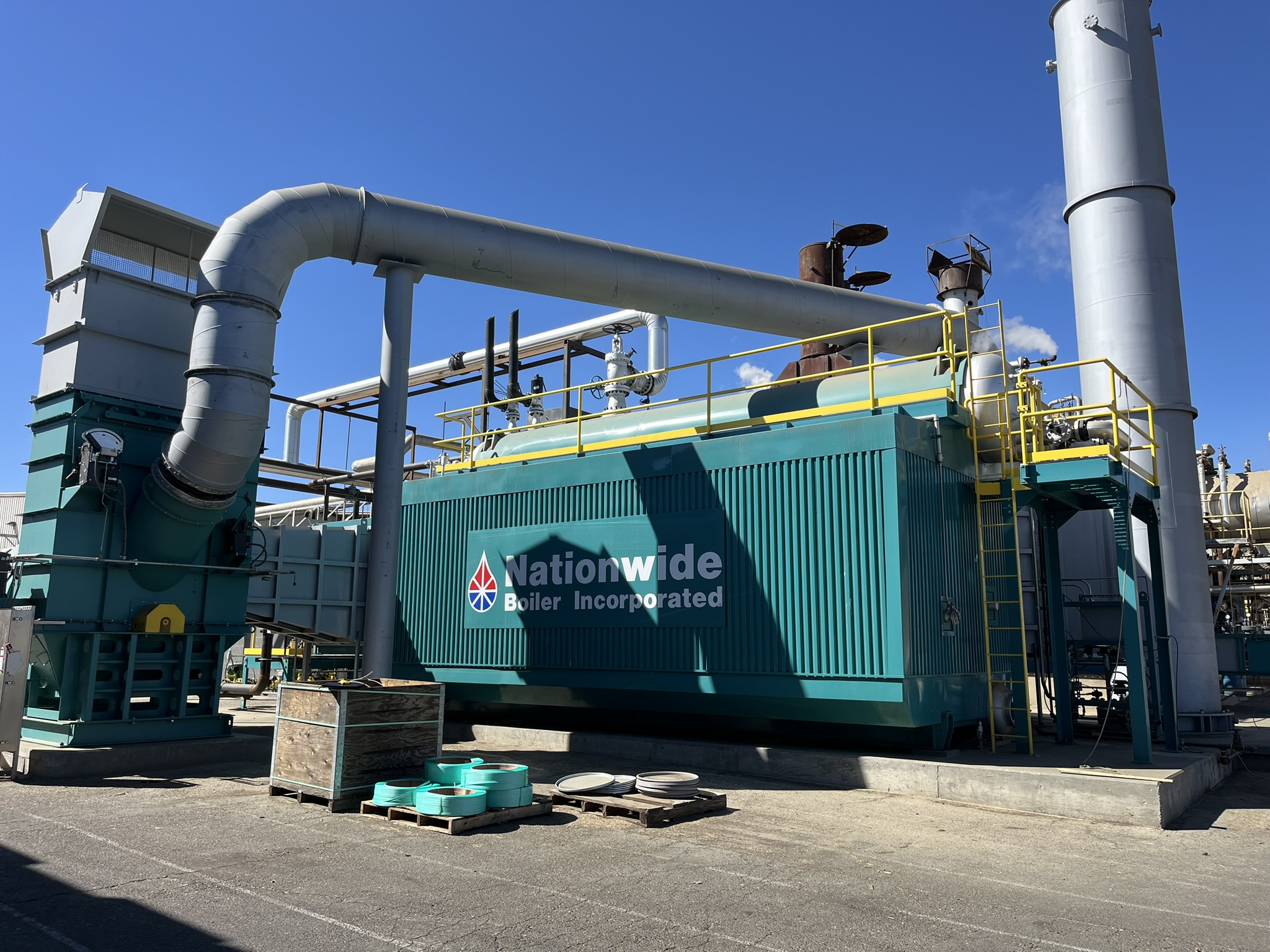
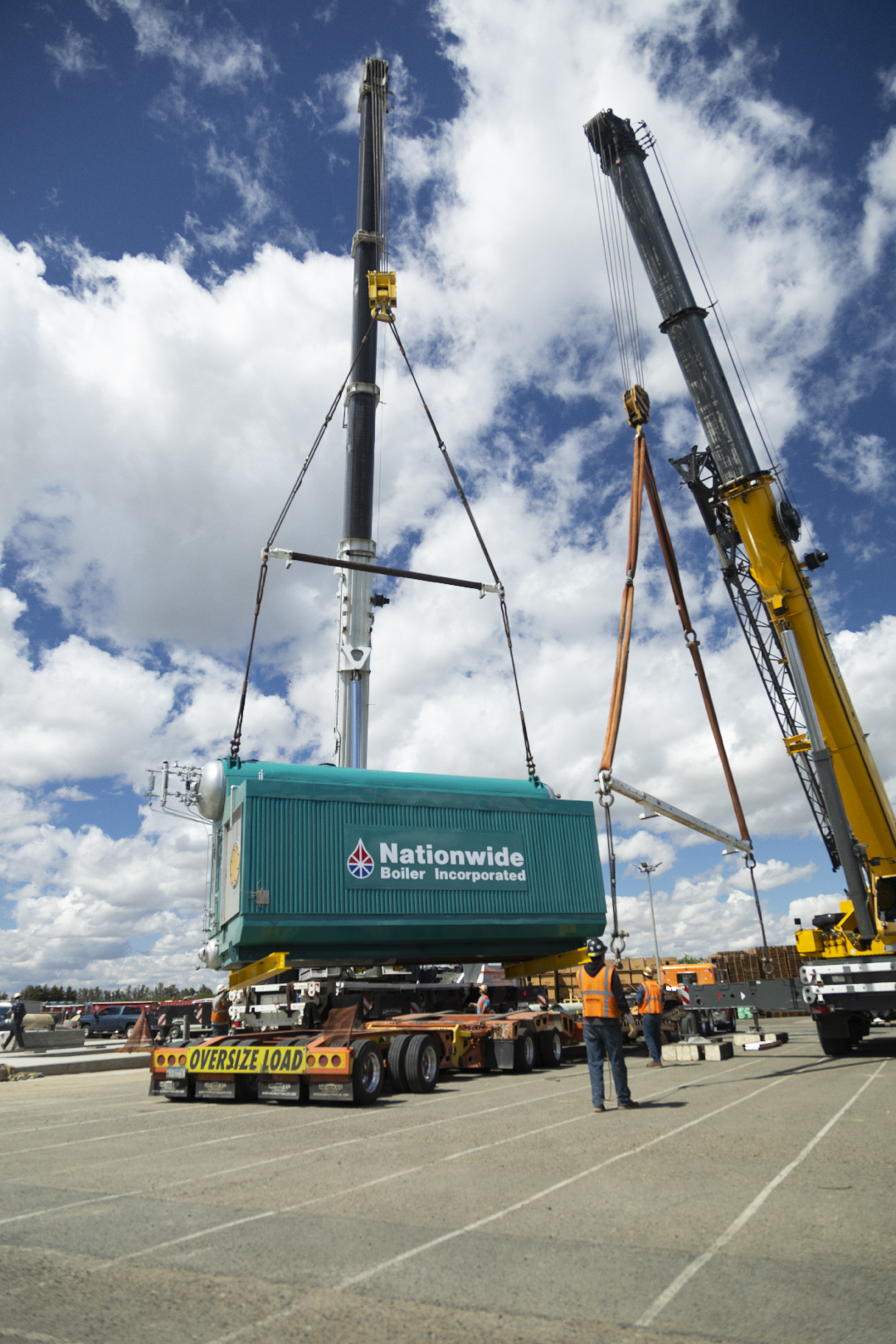
tbdddWhen timing is everything, Nationwide Boiler's in-stock boiler program delivers the solutions today’s industry demands. In 2025, ourteam successfully delivered a fast-track project including a 180,000 lb/hr, 500 psig B&W package watertube boiler with CataStak™ SCR system to a major West Coast food processing plant, overcoming logistical and regulatory challenges to keep production on track.​

This delivery exemplifies our philosophy of “Boiler Procurement, Redefined” — giving customers immediate access to high‑capacity steam without the delays typical of traditional equipment sourcing.

Meeting Urgent Customer Needs with Strategic Boiler Procurement

The project began when a long-term customer faced a critical capacity challenge. As production needs outpaced their older equipment, the prospect of waiting a year for a new boiler was not viable. Thanks to our strategic in-stock boiler program, a high-capacity B&W package watertube boiler was available for immediate shipment, transforming a potential bottleneck into a rapid success story.​

Nationwide Boiler maintains a broad range of in-stock solutions such as this 180,000 lb/hr model, enabling rapid shipping and installation across the United States and globally. Inventory covers everything from compact 50 HP vertical units to large 255,000 lb/hr superheated watertube boilers, including essential ancillary equipment like feedwater systems, blowdown separators, water softeners, and CataStak™ SCR Systems for ultra-low NOx compliance. This diversity enables customers to access rapid replacements or planned upgrades without lengthy lead times and fabrication delays.​

This is exactly what “Boiler Procurement, Redefined” means: eliminating the long lead times and uncertainty typically associated with major steam equipment purchases.

Overcoming Logistics and Delivery Challenges

Transporting equipment of this scope requires both engineering expertise and logistical finesse. Because the 180,000 lb/hr boiler was too large to transport upright, it was rotated 90 degrees and shipped on its side from Kansas to California, with police escorts ensuring both public safety and on-time arrival. When trucking emerged as the optimal solution over rail due to control and delivery timeline concerns, the engineering and logistics teams coordinated every phase to maintain speed and reliability.​

Preparation also extended beyond transport. Early piping and foundation work enabled site teams to quickly tie in connections and reduce installation timeframes once the boiler arrived.​ By managing complex moves like this, we continue redefining what boiler procurement can look like — faster, smoother, and engineered for control.

Navigating Emissions Compliance and Customization

Permitting requirements are often the major hurdle for large steam projects, especially in states like California with strict air district requirements. In this case, the replacement boiler required compliance with stringent emissions standards including 2.5 PPM NOx, 10 PPM ammonia slip, and 25 PPM CO. Our project team worked closely with both the end-user and regulatory authorities, customizing the system with Nationwide’s CataStak™ SCR technology and an enhanced heat-recovery economizer to minimize emissions and maU0A0543SMximize operating flexibility.​

The ability to match technical solutions such as fully metered controls and customized economizers to each customer’s needs establishes Nationwide Boiler as a trusted partner for food processors, petrochemical companies, and manufacturers with tight project windows and demanding performance expectations.​

Proactive Planning Pays Off for Mission-Critical Steam

A key takeaway for plants facing urgent steam shortages is that planning ahead is vital. Boiler owners and operators should consult with their team early to establish tie-in points, assess site needs, and prepare for seamless installation should an emergency arise. With standardized drawings, in-stock units, and engineered ancillary packages available, facilities can trust Nationwide Boiler to help them avoid costly downtime and accelerate timelines when every hour counts.​

This proactive approach aligns with our vision of “Boiler Procurement, Redefined” — enabling facilities to prepare for the unexpected and deploy solutions without delay.

The Nationwide Advantage: Inventory, Experience, and Customer Commitment

Whether the need is for new, reconditioned, or rental boilers, Nationwide Boiler’s extensive  inventory and experienced technical staff enable companies to address equipment failures or fast-track expansion plans. Our in-stock inventory spans a wide range of capacities, support equipment, and compliance solutions, ready to ship and ready to solve real-world challenges.​

Looking for a boiler solution ready on your schedule? Nationwide Boiler delivers on site and on time, backed by decades of expertise, redefining the traditional model for boiler procurement.

  259 Hits

Empowering Women, Advancing Industry: Nationwide Boiler at the First Women in Boiler Industry Event

Celebrating Diversity, Connection, and Leadership in the Boiler IndustryNo alternative text description for this image

Nationwide Boiler recently participated in the inaugural Women in the Boiler Industry (WIBI) Symposium, held in Minneapolis, MN, on October 15-17th, 2025. Hosted by the American Boiler Manufacturer Association (ABMA), the event joined women and men within the boiler industry to celebrate diversity, foster connections, and advance the future of the boiler industry. Our company proudly sponsored the Welcome Networking Reception for this event, and we were thrilled to have Chelsey Ryker, Director of Marketing & Communications, represent our team.

Bringing together professionals from across North America, the WIBI Symposium was a two-day event full of inspiration and learning. Attendees participated in industry tours, keynote sessions, interactive workshops, and roundtable discussions focused on shaping a more inclusive and dynamic industry. The event included keynotes and fireside chats for building leadership presence and personal mastery, as well as roundtables and panels with trailblazers whose impact is igniting change throughout the boiler community.​ The event also included sessions on boiler code changes, financial management, boosting creativity and productivity through AI, positive communication, and boiler safety.

Nationwide Boiler’s Commitment to Visibility and Advancement

In addition to her participation, Chelsey also served on the WIBI Advisory Committee to help shape the impact of the event. She expressed  the importance of Nationwide Boiler’s support of events like this through a video interview in the weeks leading up to the WIBI Symposium. “Supporting WIBI means we’re investing in visibility, empowerment, and advancement of women in our field,” she noted, underscoring Nationwide Boiler’s dedication to fostering innovation through inclusion. “It’s about creating space for new voices, showing that Nationwide Boiler stands behind the people who are shaping our future.”​

She also shared her excitement about connecting with fellow women in the boiler industry and the value of building a community where stories, experiences, and diverse perspectives can be shared. “Women can be leaders in this industry; an industry that [is evolving to embrace greater diversity], and women bring a unique perspective,” she said. “Events like WIBI matter because they shift the narrative. They show that women not only belong in the industry but they’re already leading, innovating and driving change.” The WIBI initiative goes beyond networking; it's about opening doors to new opportunities and inspiring women to pursue leadership roles, fostering a more inclusive and forward-thinking industry.

No alternative text description for this imageLeadership, Recognition, and Looking Ahead

The WIBI Symposium concluded with a dynamic panel of distinguished leaders sharing philosophies and lessons learned, and new awards celebrated trailblazers and rising stars who are shaping the future of the sector. As one event organizer noted, “The 2025 WIBI Symposium was more than a meeting, it was the beginning of a movement.” This year’s event reinforced a powerful truth: progress happens when diverse voices lead the conversation and collaborate toward shared goals.

Nationwide Boiler is proud to champion this progress, continuing to lead initiatives that foster diversity, innovation, and an inclusive future for all professionals in the industry.

  939 Hits

Flashback Friday: Nationwide Boiler Supports San Francisco Earthquake Recovery by Supporting Local Utility

Let’s take a step back in time to a brisk day in October — a day that became a defining moment in Nationwide Boiler’s history. On October 17, 1989, at exactly 5:04 p.m. Pacific Daylight Time, a powerful 7.1 magnitude earthquake struck Northern California. For residents of the San Francisco Bay Area it was a moment frozen in time, one they would never forget.

It was a calm fall evening. More than 50,000 fans were settling into their seats at Candlestick Park for Game Three of the World Series, while millions more across the country tuned in to the live broadcast. As the stadium announcer provided pregame updates, no one could have anticipated what was about to unfold. Then, the ground began to shake. Screams erupted and the announcements stopped. ABC broadcaster Al Michaels, usually composed and articulate, was momentarily speechless. The energy of the stadium was replaced with an eerie silence. What followed was one of the most significant earthquakes in California’s history: a 7.1 magnitude event that would later be known simply as “the big one.”

In a matter of seconds, freeways collapsed, bridges broke apart, and buildings shifted from their foundations. The World Series was postponed. Fires erupted in multiple areas, including a major blaze in San Francisco’s Marina District, and millions of gallons of water were deployed by first responders to fight the flames. In the midst of widespread devastation, the city narrowly avoided a far worse outcome and utility services remained operational through the night, allowing emergency crews to respond effectively.

At Nationwide Boiler’s office in Fremont, Service Manager Neil McIntosh was still absorbing the shock of the quake. As he cleaned up broken glass and restacked books scattered across the office, he had an uneasy feeling that it would be a long night. And he was right — at 11pm that evening, the facility engineer from PG&E’s Potrero Power Plant, San Francisco’s primary power generation facility, called with a critical issue that could lead to the need for a rental boiler. And the standard question followed: “How fast can you respond?”

In the hours following the earthquake, PG&E engineers struggled to diagnose a serious problem: the plant’s electrically powered feedwater pumps, responsible for supplying water to the boilers that generated steam for turbine operation, had unexpectedly shut down. Under normal conditions, multiple backup systems would prevent any drop in water levels. But in this case, the boilers continued running without feedwater. When the pumps were eventually brought back online, it was already too late. The boilers were dangerously overheated, and it was no longer safe to reintroduce water. In a stopgap effort, a U.S. Navy ship docked next to the power plant was called in to provide emergency steam to cool the boilers. While helpful, this solution was temporary, and the city’s only other power plant was operating at full capacity to meet soaring demand. A failure at Potrero could have led to widespread outages. The only sustainable option was to deploy a high-capacity, fully equipped mobile steam plant that could deliver the right temperature, pressure, and controls to safely restart the system.

Within hours, a Nationwide Boiler 250 HP mobile boiler room was loaded and shipped to Potrero. With assistance from CalTrans and the California Highway Patrol, the unit navigated through a network of damaged freeways and arrived at the site. Shortly after arrival, the mobile boiler was brought online. The overheated boilers were cooled, the feedwater pumps were reactivated, and the turbines resumed power generation. Thanks to this rapid response, the city avoided losing a vital source of electricity at a time when it was needed most.

In the days that followed, the nation watched as rescue teams worked tirelessly to pull survivors from the rubble. The extent of the devastation was immense. But despite the tragedy, fires were brought under control, and emergency services maintained critical infrastructure under extraordinary pressure. Looking back, Neal McIntosh, a history enthusiast, often reflected on what could have happened. After the 1906 San Francisco earthquake, much of the city’s destruction was caused not by the quake itself, but by the fires that followed. Had Potrero’s boilers failed beyond recovery, the consequences in 1989 could have been similarly catastrophic.

Fortunately, Nationwide Boiler’s operations were largely unaffected, allowing our team to mobilize quickly and lend support when San Francisco needed it most. That day became more than a test of our equipment; it was a testament to the dedication of our people and the importance of being ready when every minute counts. What began as a moment of crisis became a defining chapter in Nationwide Boiler’s history — one that reminded us why readiness, reliability, and service are at the core of who we are.


Screenshot 2025 10 13 154712

  1168 Hits

Types of Boilers: Key Differences You Should Know

Selecting the right boiler for your facility is more than just a design choice – it directly impacts efficiency, reliability, operating costs, and emissions compliance. Among the most common designs are firetube boilers and watertube boilers, each with unique advantages depending on the application. These boilers can also be classified by pressure (low or high), output (steam or hot water), and steam temperature (saturated or superheated), adding further considerations to the decision-making process.

The following overview outlines the key differences between firetube and watertube boilers to help facility managers, engineers, and plant operators choose the system that best fits their needs.

What is a Firetube Boiler?

A firetube boiler, also known as Scotch Marine boiler, is one of the most traditional and widely used boiler designs. In this system, a large pressure vessel holds water, and tubes carrying hot combustion gases run through the vessel. As the gases pass through these tubes, heat is transferred to the surrounding water, gradually increasing its temperature until it produces either hot water or steam depending on the application. Because the “fire” or combustion gases are inside the tubes, the design is known as a firetube boiler.

Key Advantages:

  • Lower upfront cost and simpler design
  • Easier to operate and maintain
  • Suitable for small to medium-sized facilities

Limitations:

  • Slower to respond to load swings due to large water volume
  • Design pressure capability is more compared to watertube designs

Firetube boilers are commonly utilized in industries and facilities such as small food processing plants, hospitals, schools, universities, and other heating applications where dependable steam or hot water is needed for steam systems operating at 150 psig and less.

What is a Watertube Boiler?

A watertube boiler operates differently than a firetube boiler. Instead of hot gases flowing through tubes surrounded by water, a watertube design allows water to circulate inside the tubes while the combustion gases pass around them. This configuration enables the system to handle much higher pressures and produce greater steam capacities than firetube units.

Key Advantages:

  • Handles higher range of pressures, commonly up to 750 psig but pressures over 1000 psig are possible.
  • Faster startup and load response
  • More compact water content, reducing risk of catastrophic failure

Watertube boilers are commonly used in high-demand industries such as power plants, petrochemical plants, refineries, pulp and paper mills, large food processing, and large-scale manufacturing facilities, where high-pressure steam and higher capacities are required.

Limitations:

  • Higher initial cost due to design and manufacturing differences
  • Space requirements
  • Typically, higher operation and maintenance costs

High Pressure vs. Low Pressure Boilers

Boilers are also defined by their maximum allowable working pressure (MAWP):

  • Low Pressure Boilers: Operate at 15 psig or below. Commonly used for heating systems and hot water supply, they require less maintenance and are easier to manage.
  • High Pressure Boilers: Designed for pressures above 15 psig. These units are essential for industrial steam production, power plants, and manufacturing processes where higher output is required.

Firetube boilers can be built for both pressure ranges, but watertube boilers are almost always high pressure due to their design.

Hot Water Boilers vs. Steam Boilers

While often confused, hot water boilers and steam boilers are separate classifications that can be applied to either firetube or watertube designs.

  • Hot Water Boilers: Operate like large fuel-fired water heaters, producing hot water in the range of 120 - 220°F. These are primarily used for building heat, hydronic heating systems, and domestic hot water.
  • Steam Boilers: Heat water beyond the boiling point to create steam. These systems are more powerful and used in industrial processing, sterilization, district energy systems, and power generation. Steam boilers may generate either saturated steam or superheated steam, depending on the application.

Saturated vs. Superheated Steam

When discussing steam boilers, it's important to understand the distinction between saturated steam and superheated steam, as each serves different industrial needs.

  • Saturated steam is steam that is in equilibrium with water at the same temperature and pressure. It contains no additional heat beyond what's needed to convert water into steam. This type of steam is commonly used in heating applications and processes where direct contact with the product is required, such as food production or sterilization.
  • Superheated steam, on the other hand, is produced by adding more heat to saturated steam without increasing its pressure. This results in steam at a higher temperature, which is ideal for driving turbines and other mechanical equipment. Because it doesn’t condense as easily, superheated steam is more efficient for energy transfer over long distances.

Understanding which type of steam your application requires can help you choose the right boiler and optimize performance.

Electric Boilers

Electric boilers are gaining popularity as a clean and efficient alternative to traditional fuel-fired systems. Instead of burning gas, oil, or coal, electric boilers use electrical resistance or induction to generate heat.

Key advantages include:

  • Zero emissions at the point of use, making them ideal for facilities with strict environmental regulations.
  • Compact design and quiet operation.
  • High efficiency, often approaching 100%, since nearly all the electrical energy is converted into heat.

While electric boilers may have higher operating costs depending on electricity rates, they offer a low-maintenance, sustainable solution for many commercial and industrial applications—especially where fossil fuel infrastructure is limited or undesirable.

Making the Right Choice for Your Operation

Every boiler, whether firetube, watertube, steam, or hot water, has its unique strengths. The right choice depends on:

  • Your unique operational needs; pressure requirements and steam capacity
  • Facility size and available footprint
  • Operator experience and maintenance resources
  • Energy efficiency and emissions requirements

With modern advances such as ultra-low NOx burners, economizers, and Nationwide’s proven CataStak™ SCR System for near-zero NOx performance, today’s boilers are more efficient and environmentally friendly than ever before.

Whether you’re evaluating a firetube boiler for a commercial application or a watertube boiler for high-pressure steam production, understanding the differences between boiler types is essential for making the right investment.

For more details and guidance, explore our resource: What Boiler Is Best for You.

This article has been updated to reflect its original publication date of April 2019, while incorporating current insights and clarifications to ensure continued relevance and accuracy.

  28548 Hits